
Crawl spaces are notoriously tight, uncomfortable, and forgiving of zero mistakes. If you’ve ever squeezed under a floor joist with barely two feet of clearance, trying to stabilize a sagging beam with a basic single-screw jack, you know the exact misery: every quarter-turn feels like a full-body workout, and standard single-thread posts take an eternity to reach the joist, let alone lift it.
That’s why we engineered our Dual-Thread Adjustable House Jacks specifically around how crawl space leveling actually works in the real world.
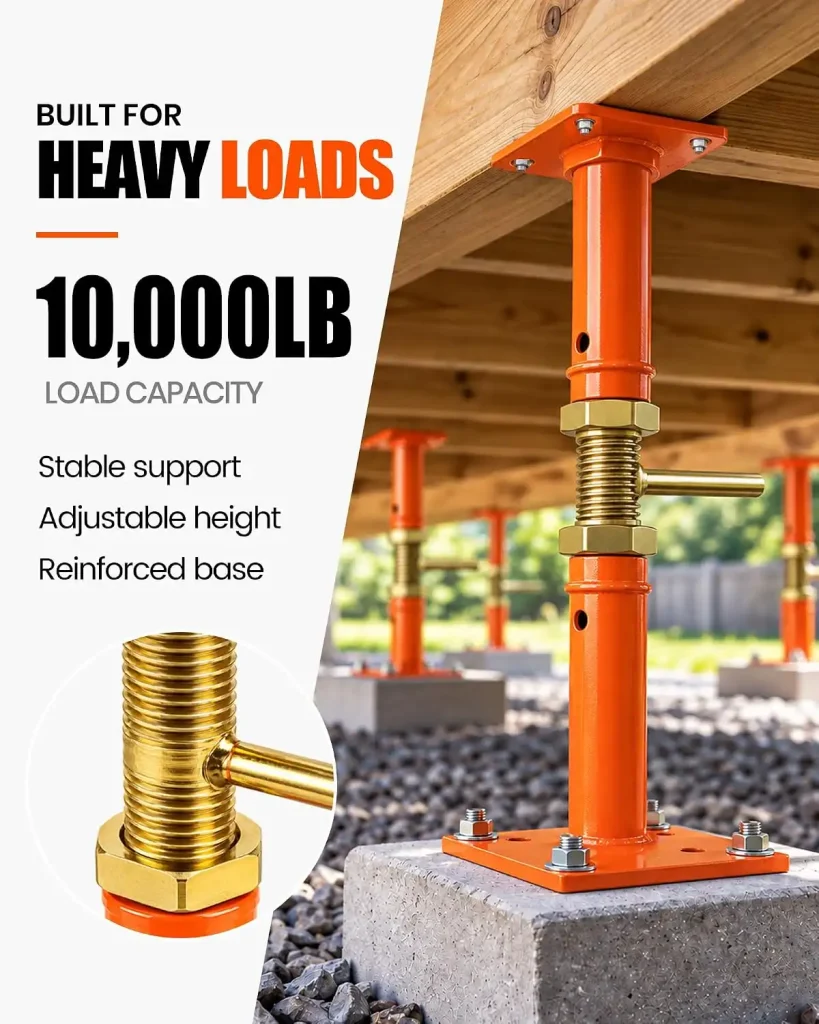
Instead of relying on a traditional single-thread design, these 10,000 lbs capacity steel screw jacks use counter-opposing threads through the adjustment sleeve. When you rotate the center section, both the top and bottom threads extend or retract at the exact same time. It effectively doubles your vertical movement per full turn, which means less time lying on a cold concrete footing fighting stubborn steel hardware.
When dealing with unlevel floors or settling beams, the issue isn’t just getting a post into position—it’s dealing with immense downward resistance. As a foundation leveling screw jack takes on the structural weight of floor joists, subfloors, and walls, standard single threads create massive friction.
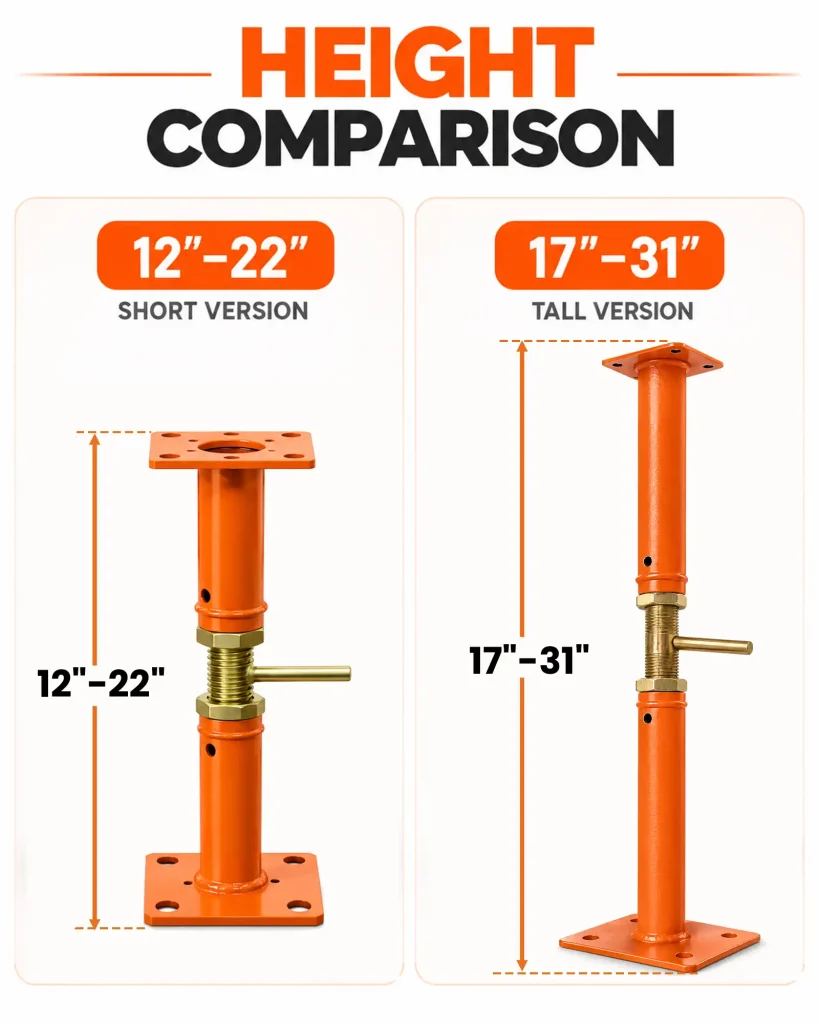
Traditional jack posts require crazy amounts of turning torque the moment the top support plate contacts the beam. You end up needing long breaker bars or improvised pipes just to gain enough leverage for a fraction of an inch of height—and in a tight crawl space with 12 to 31 inches of clearance, you rarely have room to swing a long tool anyway.
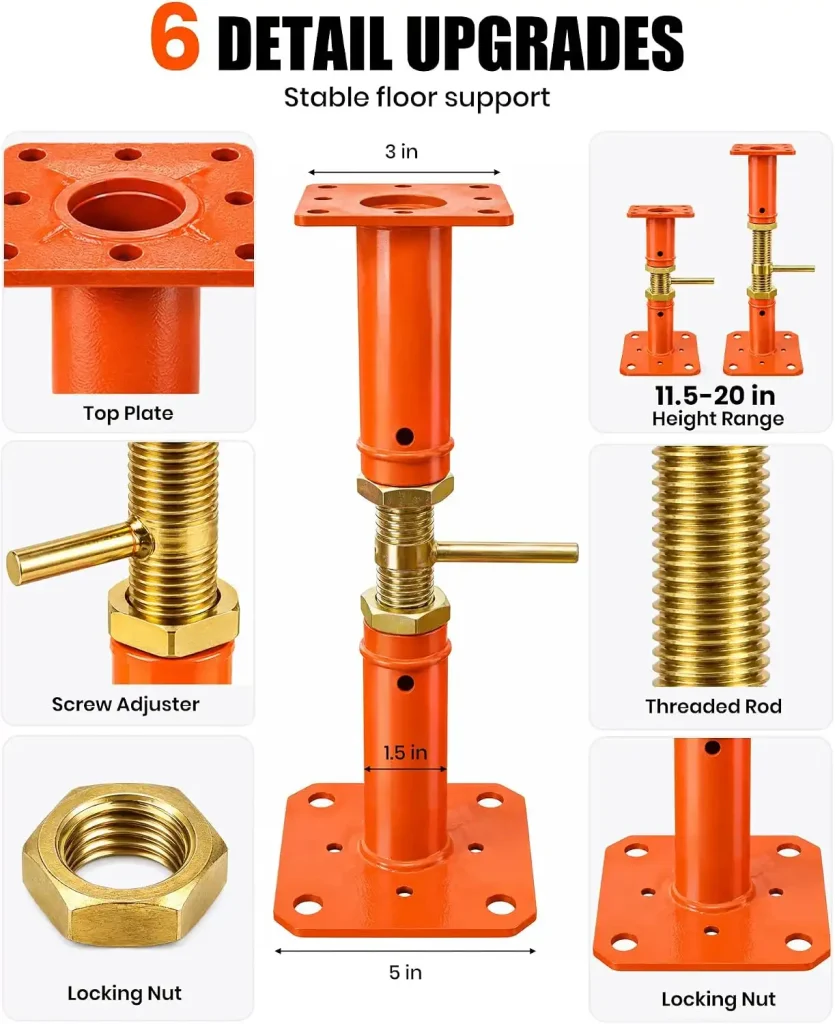
Using dual-threaded crawl space floor supports changes the whole installation dynamic in three very real ways:
Not all crawl spaces are built the same, which is why having the right working range matters just as much as thread mechanics:
Need even higher reach for basements or deep subfloors? See our 21″–43″ Extended Reach Floor Jack Posts (2-Pack).
If you’re leveling floor joists, reinforcing sagging beams, or setting up supplemental crawl space floor supports, you don’t want to spend extra time wrestling with inefficient tools under a house.
Explore our full line of Heavy-Duty House Jacks for Leveling to find the exact size and load rating for your home restoration project. Before starting your installation, make sure to read our guide on how to safely prepare concrete footings in crawl spaces.