
If you notice doors sticking in their frames, gaps opening between your baseboards and the floor, or a noticeable slope when walking across your living room, you are likely dealing with sagging floor joists. In many American homes—especially older structures or homes built over damp basements and crawl spaces—subfloor support beams can settle, flex, or weaken over time.
Repairing a dipping floor does not always require tens of thousands of dollars in major structural foundation work. By using heavy-duty adjustable screw jacks (also called house leveling jacks or jack posts), knowledgeable homeowners and contractors can safely stabilize floor beams and restore structural support.
In this guide, you will learn why floor joists sag, essential structural safety limits, step-by-step instructions for installing house jacks, and how to choose the right jack size for your crawl space clearance.
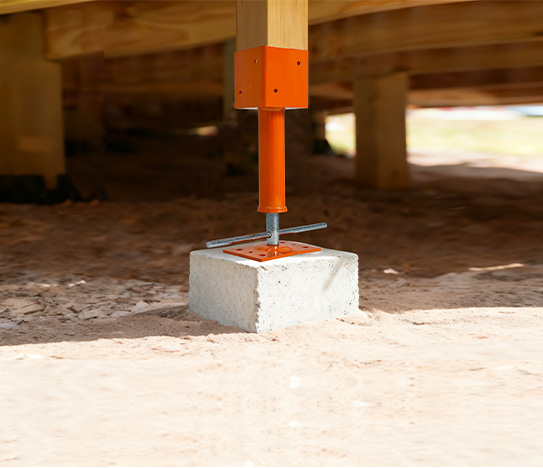
Before placing support jacks under your house, it is essential to identify why the framing dropped. Simply pushing up on a weakened beam without addressing the underlying issue will only provide a temporary fix.
The most common causes of sagging subfloor structures include:
Lifting structural weight requires extreme caution. Before crawling under your home with a screw jack post, adhere strictly to these engineering safety rules:
To level a sagging beam or floor joist safely, gather the following tools:
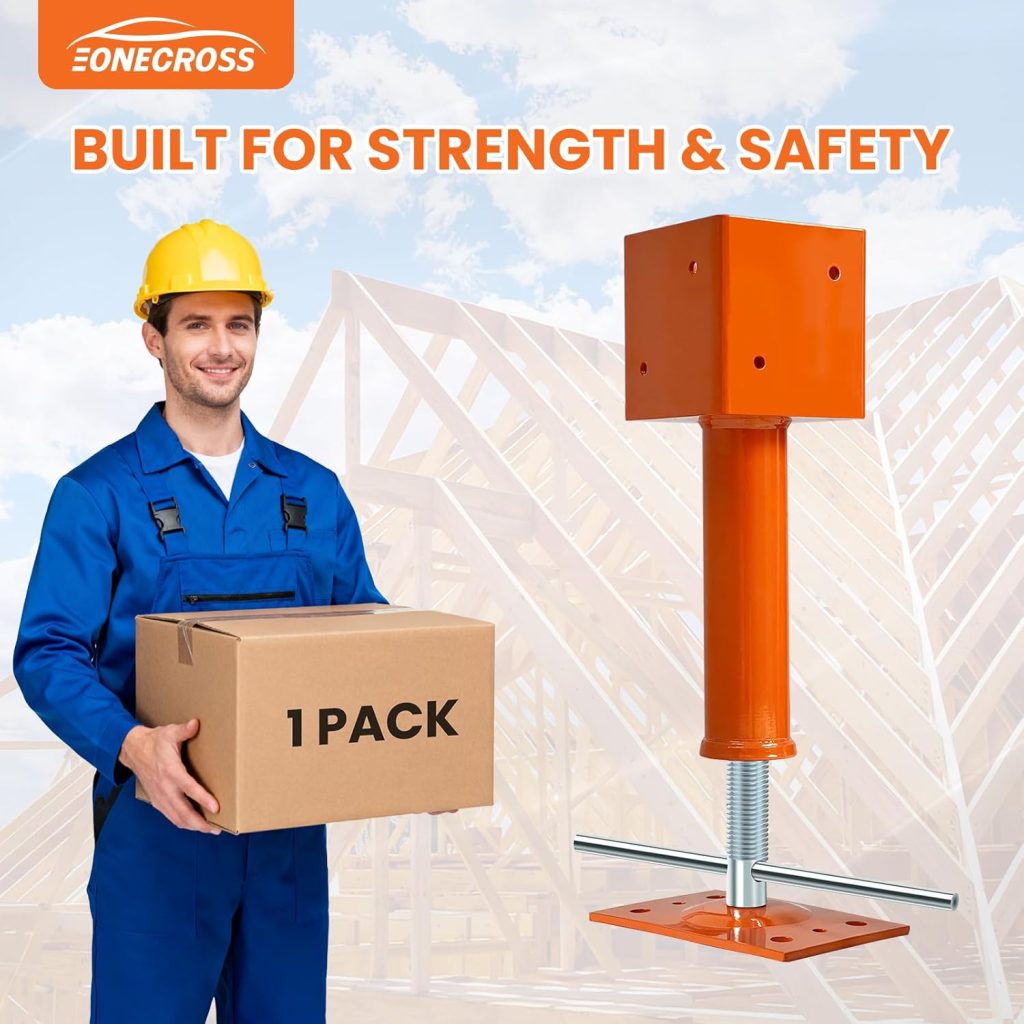
Crawl beneath your subfloor and inspect the floor framing. Look for sagging joists, rotted sill plates, or gaps between the main beam and floorboards. Have a helper walk on the floor above while you observe movement from below. Measure the exact vertical clearance from the ground pad to the underside of the beam.
Clear away mud and loose debris where the jack post will stand. Place a solid pre-cast concrete pier pad or pour a concrete base. Use a carpenter’s level to ensure the pad is perfectly flat. A tilted pad creates dangerous lateral pressure on the jack post.
Position the heavy-duty 4″ x 6″ base plate flat on the concrete pad (secure using its 6 pre-drilled mounting holes if fixing permanently). Place your 4×4 pressure-treated timber (actual 3.7″ x 3.7″) squarely into the jack assembly and ensure both timber ends sit flush to eliminate uneven stress points.
Place the jack assembly directly under the lowest point of the sagging beam, or under a temporary distribution beam spanning multiple joists. Use a spirit level on two adjacent sides of the post to ensure it is 100% plumb (vertical). An off-center post can buckle under heavy structural load.
 [Existing Sagging Floor Joist / Beam]
  ===================================
                  ||
          [Steel Top Saddle]
                  ||
    [Pressure-Treated 4x4 Lumber Post]
      (Square-Cut 3.7" x 3.7" Timber)
                  ||
       [1.25" Steel Screw Rod & Nut]
       [   Removable Swivel Handle   ]
                  ||
       [Heavy-Duty 4" x 6" Base Plate]
     (6-Hole Secure Mounting System)
                  ||
  ===================================
    [Solid Concrete Pier Pad / Footing]
Insert the included metal pole into the swivel handle of your EONECROSS house jacks. Rotate the lever tool-free to raise the 1.25″ heavy-duty screw rod until the top plate makes firm, flush contact with the wooden beam. Hand-tighten to eliminate any play.
Once your carpenter’s level shows the floor above is flat and bouncy movement is eliminated, secure the jack in place. The removable swivel handle can be detached for neat storage in tight crawlspaces. Leave the jack post in place for temporary shoring or permanent structural reinforcement as permitted by local building codes.
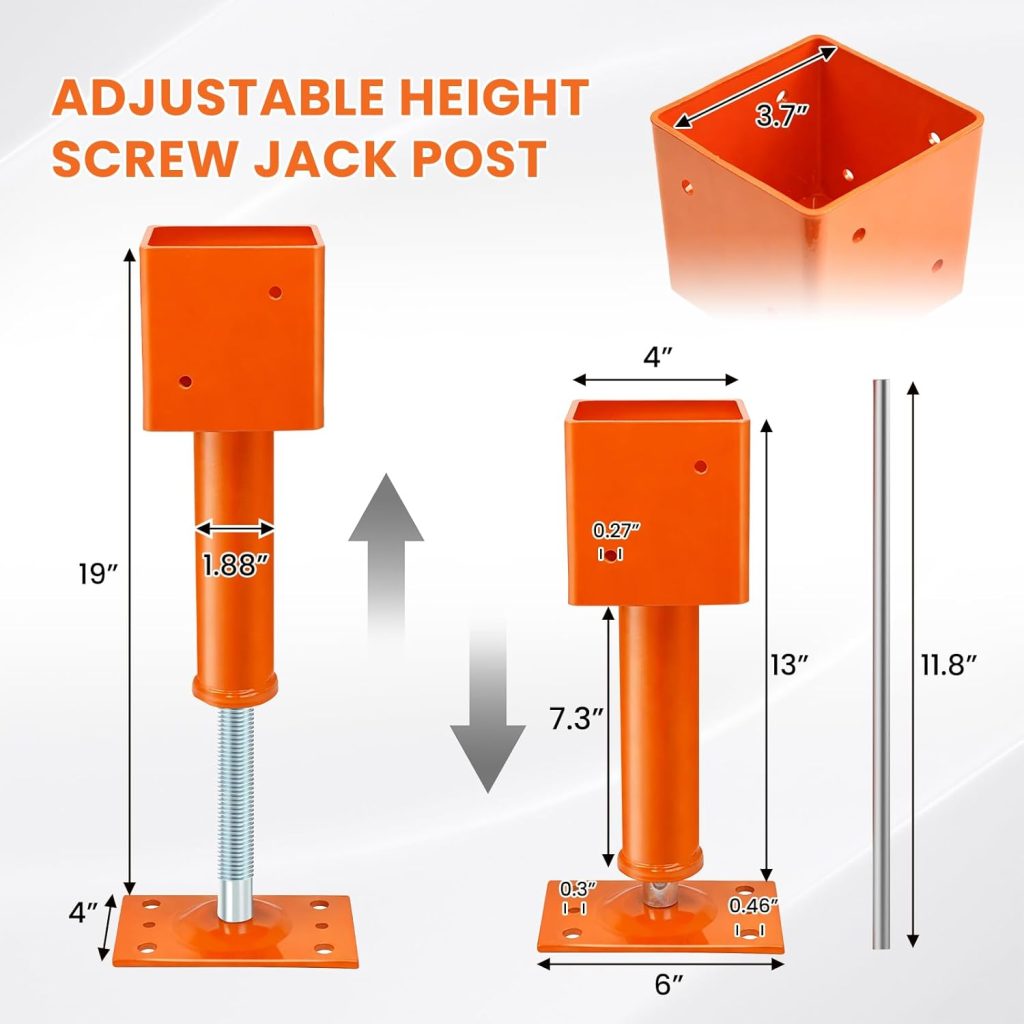
Not all crawl spaces are created equal. When browsing crawl space jacks for sale, match your product selection to your working height and load requirements:
| Feature Specification | EONECROSS Heavy-Duty 4×4 Screw Jack | Compact Low-Profile Screw Jacks |
| Max Load Capacity | 24,700 lbs (High-strength structural steel) | 4,000 – 10,000 lbs average |
| Height Adjustment Range | 13.2″ to 18.7″ (6-inch total travel) | 4″ to 9″ low clearance |
| Screw Rod Diameter | Heavy-duty 1.25″ Screw Rod | 0.75″ to 1.0″ standard rod |
| Timber Compatibility | Fits standard 4×4 posts (Actual 3.7″ x 3.7″) | Direct metal-to-beam contact |
| Base Plate Design | 4″ x 6″ plate with 6 mounting holes | 4″ x 4″ basic flat plate |
| Corrosion Resistance | Orange Electrophoretic Coating (Rust & wear resistant) | Standard black paint or galvanized |
| Operation | Tool-free swivel handle (Removable for easy storage) | Manual wrench nut |
For standard crawl spaces, basements, decks, and foundation repairs, choosing an EONECROSS adjustable 4×4 house jack post gives you the ultimate combination of custom 4×4 timber height flexibility, superior rust protection in damp environments, and up to 24,700 lbs of certified load support.
A: Yes. The EONECROSS house jack is constructed from heavy-duty structural steel with a corrosion-resistant orange electrophoretic coating, making it ideal for both temporary shoring and permanent house jack applications in damp basements and crawlspaces. Always confirm local International Residential Code (IRC) requirements for permanent structural supports in your city.
A: The top/bottom saddle is specifically designed to fit standard 4×4 posts with actual physical dimensions of 3.7″ x 3.7″. Always use sound, pressure-treated structural lumber cut cleanly and square at both ends.
A: A single EONECROSS 4×4 house jack features a 1.25″ heavy-duty screw rod and a reinforced 4″ x 6″ base plate that supports a maximum load capacity of up to 24,700 lbs, providing reliable strength for heavy floor beams, decks, and foundation leveling.
A: The swivel handle allows quick, tool-free height adjustments from 13.2″ to 18.7″. Making it removable ensures convenient storage and prevents obstruction in tight crawlspace or basement working conditions once the post is secured.