
If you’ve ever noticed a floor that feels uneven or a doorway that no longer closes properly, the problem may not be the flooring itself. In many homes, slight settling over time causes floor joists or support beams to shift, leaving parts of the floor lower than they should be.
Adjustable house jacks are one of the most common tools used during floor leveling projects. They provide temporary or long-term support while structural repairs are being completed, making them useful for basements, crawl spaces, and remodeling work.
For homeowners and contractors comparing different support options, our Adjustable House Jacks Collection includes heavy-duty solutions designed for floor leveling, basement support, and crawl space applications.
Although the installation process isn’t complicated, proper planning is important. Raising a floor too quickly or placing a jack on an unstable surface can create new structural problems instead of solving the original one.
This guide explains when adjustable house jacks are typically used, how they work, and the basic steps involved in a floor leveling project.
Most homeowners don’t realize they need additional floor support until they notice changes inside the house.
Some common signs include:
In many cases, these symptoms are related to weakened support beams, settling foundations, or aging crawl space structures.
Adjustable house jacks are commonly used to stabilize these areas before permanent repairs are completed.
They’re also frequently used during:
The exact solution depends on the cause of the settlement, but adjustable support jacks often play an important role in restoring structural stability.
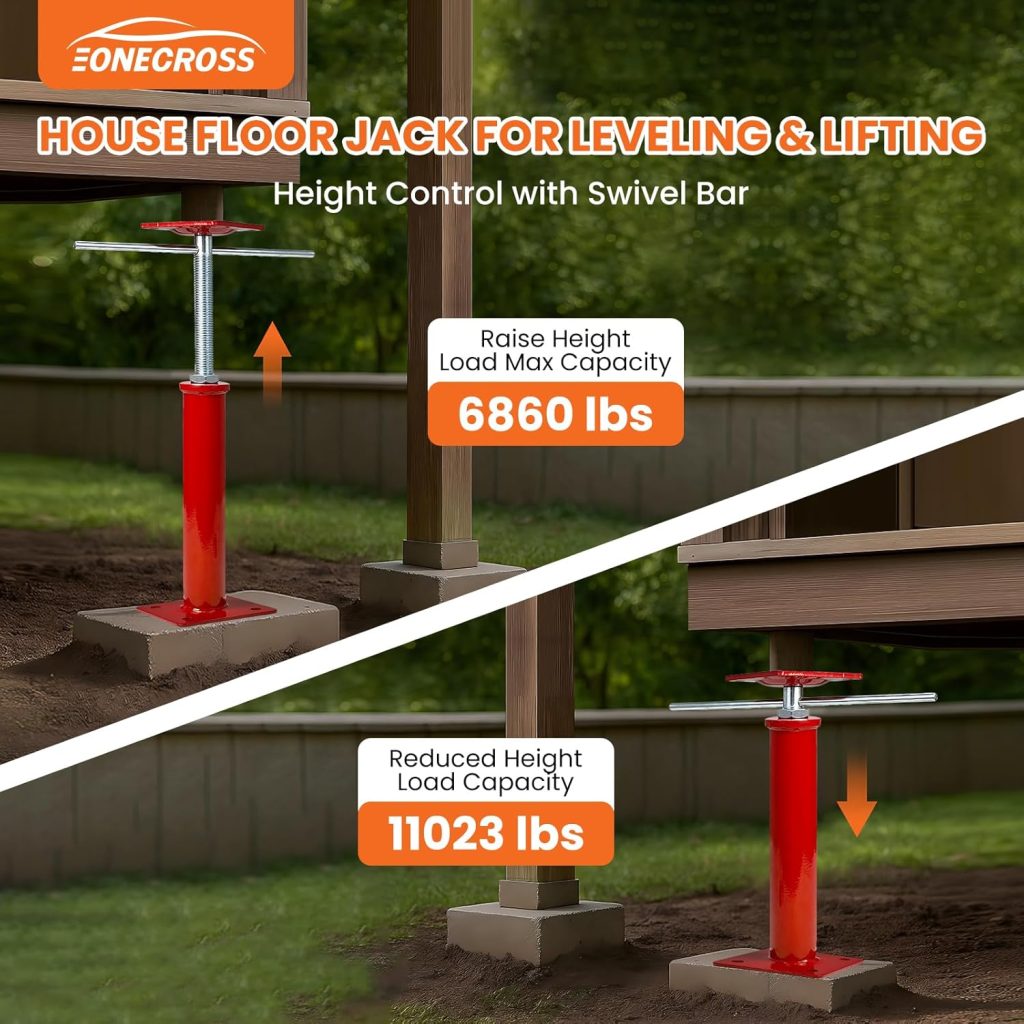
Not every project requires the same type of support jack.
Before purchasing one, consider the following:
Measure the distance between the floor and the beam you’ll be supporting. Choose a model that allows enough adjustment without reaching its maximum extension.
Every adjustable house jack has a rated capacity. Always select a model that comfortably exceeds the expected load.
A jack used inside a dry basement may not require the same corrosion protection as one installed in a damp crawl space.
Powder-coated steel is generally a better choice for environments with higher humidity.
Perhaps the most overlooked factor is the surface beneath the jack.
A concrete footing or properly engineered support pad helps distribute weight safely. Installing a jack directly on loose soil can cause it to sink over time.
When selecting a support jack, factors such as height adjustment range, steel construction, and load capacity can make a significant difference. Our heavy duty adjustable house jacks are designed for projects that require reliable support and long-term durability.
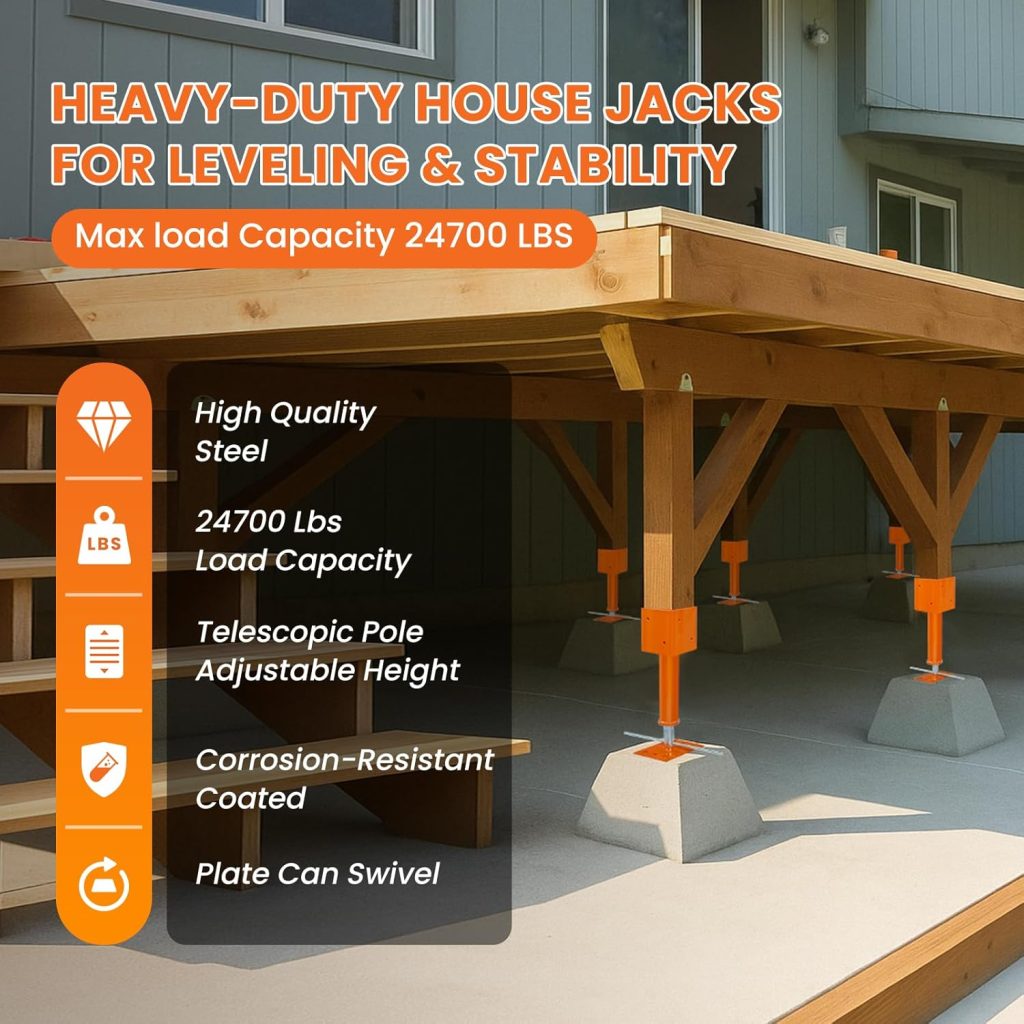
Every home is different, but the general process is similar.
Use a long level or laser level to determine where the floor has settled.
The goal is to understand how much movement has occurred before making any adjustments.
Check the condition of:
If structural damage is severe, repairs may be necessary before adding additional support.
Never place an adjustable house jack directly on dirt or loose gravel.
Instead, install it on a properly sized concrete footing or other load-bearing surface designed to support the weight safely.
One of the biggest mistakes people make is trying to level a floor too quickly.
Even if the floor appears significantly lower in one area, raising it several inches in a single adjustment can place unnecessary stress on floor joists, drywall, plumbing, and door frames.
Instead, make small adjustments over time. This gradual approach allows the structure to adapt more naturally and reduces the risk of creating new cracks or alignment issues elsewhere in the house.
If you’re working on a larger structural repair, it’s often worth consulting a qualified contractor before making significant adjustments.
After each adjustment, take a few minutes to inspect the surrounding area.
Pay attention to:
Sometimes a small adjustment produces noticeable improvements immediately. In other situations, it may take several days before additional adjustments are necessary.
Patience is usually the safest approach.
Adjustable house jacks are designed to support heavy structural loads, but they should always be used correctly.
Some important safety practices include:
If a beam, foundation wall, or floor system shows significant structural damage, professional evaluation is recommended before beginning any lifting project.
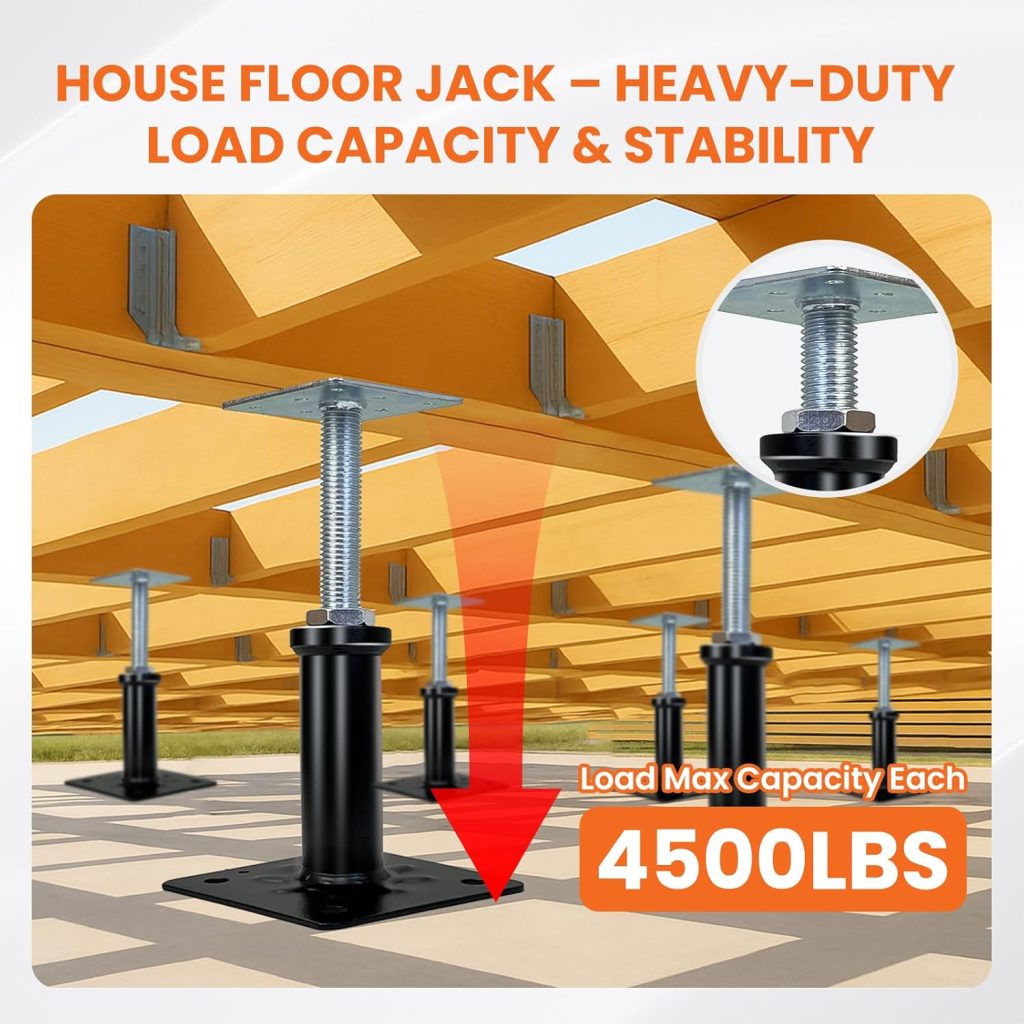
Most problems aren’t caused by the jack itself—they’re caused by improper installation or unrealistic expectations.
Some of the most common mistakes include:
A jack should always be rated for the intended structural load. Choosing a model with insufficient capacity can create serious safety risks.
Loose soil or gravel may compress over time, causing the jack to settle and reducing its effectiveness.
Rapid adjustments can transfer stress throughout the structure and may lead to cracked finishes or binding doors and windows.
An adjustable house jack helps support the structure, but it does not solve issues such as foundation movement, water damage, or deteriorated framing. Identifying the root cause is just as important as adding support.
One question that comes up frequently is whether adjustable house jacks are intended for temporary or permanent use.
The answer depends on the specific product, the installation method, and local building requirements.
Many homeowners use adjustable jacks to stabilize a structure while replacing beams or repairing floor joists. Others install approved support systems as part of a long-term structural repair.
Before using any jack as a permanent support, verify that the product is suitable for permanent installation and that it complies with local regulations.
Adjustable house jacks can be an effective solution for floor leveling, crawl space reinforcement, and temporary structural support when they’re installed correctly.
The key is not simply lifting the floor—it is supporting the structure safely, making gradual adjustments, and ensuring the load is transferred to a solid foundation.
Whether you’re correcting a minor sag or preparing for a larger renovation, taking the time to choose the right support jack and following proper installation practices will help achieve better long-term results.
If you’re comparing different load capacities or height ranges, explore our Adjustable House Jacks Collection to find a solution designed for floor leveling, basement reinforcement, and crawl space support.
A: They can help support and gradually level sagging floors when the problem is related to weakened beams or settling. However, they do not repair damaged framing or foundation issues by themselves.
A: Most professionals recommend making gradual adjustments rather than lifting a floor all at once. This helps reduce stress on the home’s structure and minimizes the risk of cosmetic damage.
A: Yes. They’re commonly installed in crawl spaces to reinforce floor joists, support beams, and stabilize areas affected by settlement.
A: Yes. They are frequently used during basement remodeling and structural reinforcement projects where additional temporary or permanent support is required.
A: A stable load-bearing surface is strongly recommended. In many applications, this means placing the jack on a properly designed concrete footing to distribute the load safely.
A: Measure the distance between the support beam and the installation surface, then select a jack with an appropriate adjustment range and load capacity for your project.
A: Some models are designed for permanent installation, while others are intended for temporary support only. Always follow the manufacturer’s recommendations and local building codes.