The return and refund policy apply to all the products sold on EONECROSS.
Please inspect your order upon reception and contact us via mail (service@eonecros.com) if you have any questions about your order.
Returns
You are qualified for returns if
- Within 30 days of receipt of shipment.
- Products are in salable condition, unworn or unused, with tags.
- In the original manufacturer's packaging. We strongly recommend you keep the packaging for the first 30 days after purchase.
Replacement
You are qualified for replacement if
- Items are defective or damaged during the delivery (Picture of defective or damaged product will be required).
- Missing panel in the package.
- Received the wrong product (Picture of the label on the package will be required).
- We will send prepaid return label only if customers received wrong products and qualified for replacement.
Exchanges
You are qualified for exchange if
- Within 30 days of receipt of shipment.
- You will be responsible for paying for returning shipping cost in case of a non-defective product.
- The fastest way to ensure you get what you want is to return the item you have, and once the return is accepted, make a separate purchase for the new item.
- Depending on where you live, the time it may take for your exchanged product to reach you, may vary.
Shipping Service for Return
All items must be returned to the seller with a trackable shipping service. We suggest USPS delivery confirmation service. We may not be eligible for a full refund if your package doesn't arrive and you don't use a trackable method to return.
Return Process
To initiate a return, please reach out to us at service@eonecros.com. Upon approval of your return request, we will provide you with a return address. Please note that you will be responsible for shipping the item back to us. Make sure to include the RMA reference number we provide you with your return package. Any items returned without first obtaining a return will not be accepted.
Refund (if applicable)
All product returns must be in salable condition to receive a full refund. If the item is used or unsalable, the order might be nonrefundable. We reserve the right to submit a full, partial or no refund.
Refund Handling Fee
Please note: A 5% handling fee will be deducted from the refund amount for processing returns, applicable only to full refunds. This fee covers the administrative costs associated with processing your return, including restocking and handling the returned items.
The handling fee is applied to ensure that we can continue to provide quality service and maintain our inventory effectively. It allows us to manage the logistics involved in returns, ensuring that the process is smooth for all customers.
For example, if your total refund amount is $100, a $5 handling fee will be deducted, resulting in a total refund of $95. This fee is part of our commitment to maintaining efficient operations while providing you with the best possible shopping experience.
Partial refunds only if
- Any item not in its original condition, is damaged or missing parts.
- Any item that is returned more than 30 days after delivery.
Shipping cost is not refundable for customer’s change of mind. If you are qualified for a refund, the cost of original shipping will be deducted from your refund.
Late or missing refunds (if applicable)
First check your bank account again and then contact your credit card company, it may take some time before your refund is officially posted. If you’ve done all of this, please feel free to contact us at service@eonecros.com.
Refunds Process (if applicable)
We will notify you once we’ve received and inspected your return, and let you know if the refund was approved or not. If approved, your refund will be submitted and applied to your original payment method automatically within 5 business days. Please remember it can take some time for your bank or credit card company to process and post the refund.




Moeezz damon –
The 57.1-inch width can handle many common large planks, tabletops, and log veneers, making it practical for home woodworking workshops and small custom furniture projects. The adjustable structure can be set according to the width of the board and the workbench conditions, eliminating the need to remake disposable wooden tracks for each type of board, saving considerable preparation time and materials in the long run. Initial assembly requires careful identification of component orientation and checking that the guide rails are parallel and the crossbeams are level. After proper alignment, the milling cutter slide moves smoothly laterally and is easy to control forward and backward, without noticeable jamming or sudden swerving. After securing the board with shims and clamps, I started cutting layer by layer from a higher position, removing only a small amount of material each time. After several parallel cuts, the previously twisted and uneven surface became much smoother. The heavy-duty frame remains stable during milling; as long as the depth of cut and travel speed are appropriate, there is no noticeable bouncing or violent vibration. Compared to relying entirely on a handheld planer or sander, this guide rail makes it easier to maintain a consistent cutting height, and the finished surface is more controllable. However, initial installation and calibration do take some time. Clearer assembly diagrams, leveling steps, and milling machine compatibility dimensions in the product manual would make it easier for beginners. Different brands and base sizes of woodworking milling machines may not be directly compatible. Before use, ensure your milling machine is securely fixed to the slide and check the cutter extension range. While the sliding parts generally move smoothly, it’s best to clean the guide rails and check all connections before use. Adjusting and lubricating individual areas will improve the feel. The 57.1-inch structure provides a wide range of machining capabilities but also occupies considerable workspace; a flat, sturdy, and sufficiently long worktable is required. The wood planks must be securely fixed, and the bottom pads must not move during milling; otherwise, even with flat guide rails, the final surface may have errors. Using large-diameter leveling mills generates a lot of sawdust and dust; it’s best to use a dust collection device, safety goggles, hearing protection, and a suitable dust mask. Each cut should not be too deep, and the moving speed should be kept stable. If too much material is removed at once, it will not only leave tool marks but also increase the burden on the milling cutter, milling machine, and guide rails. Although there are areas for improvement or prior consideration regarding the instruction manual, initial leveling, milling machine compatibility, and storage space, it remains a practical and worthwhile woodworking tool set for consumers who need to make solid wood tabletops, solid wood furniture, or perform large-area wood leveling.
BMLi –
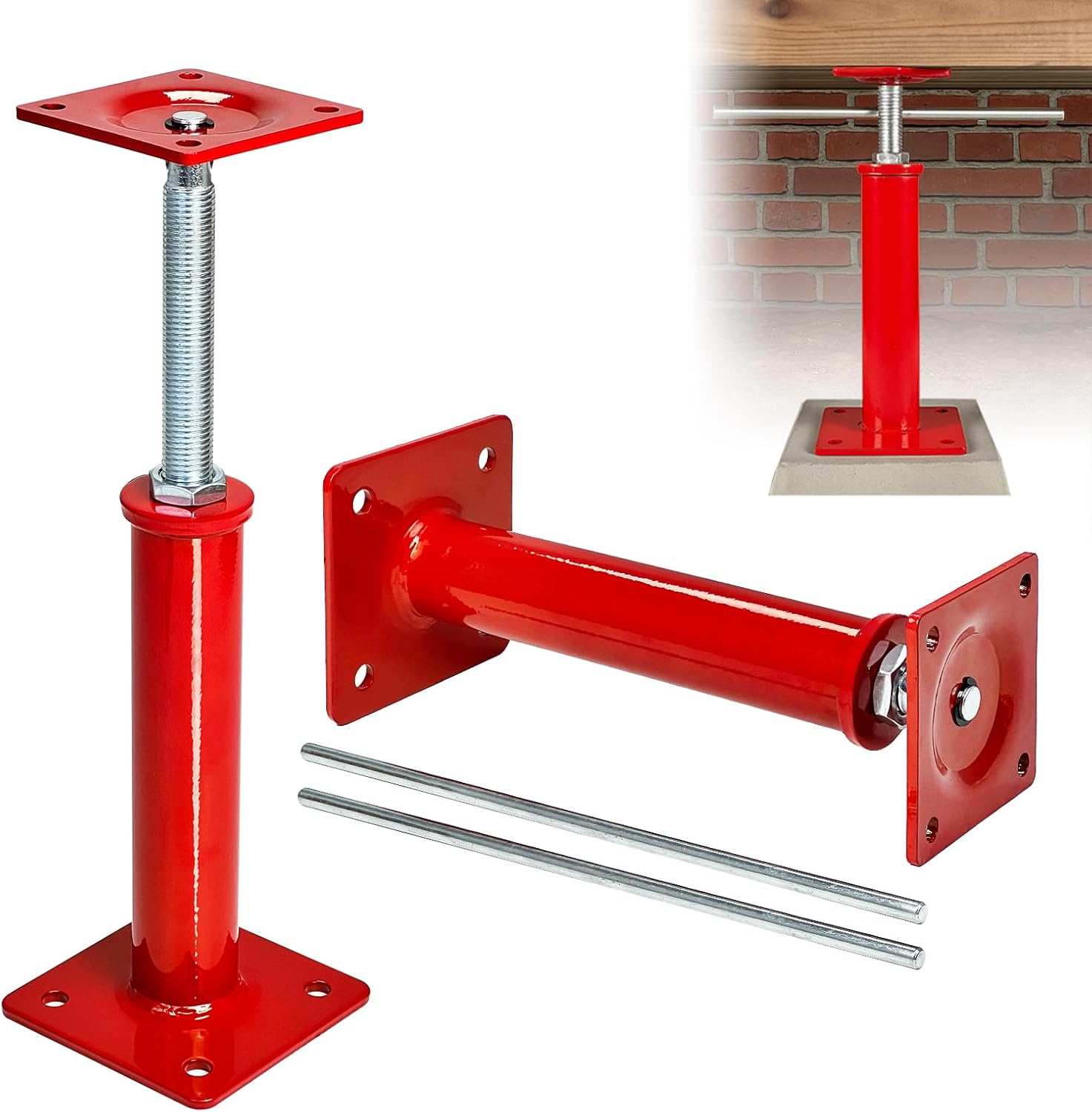
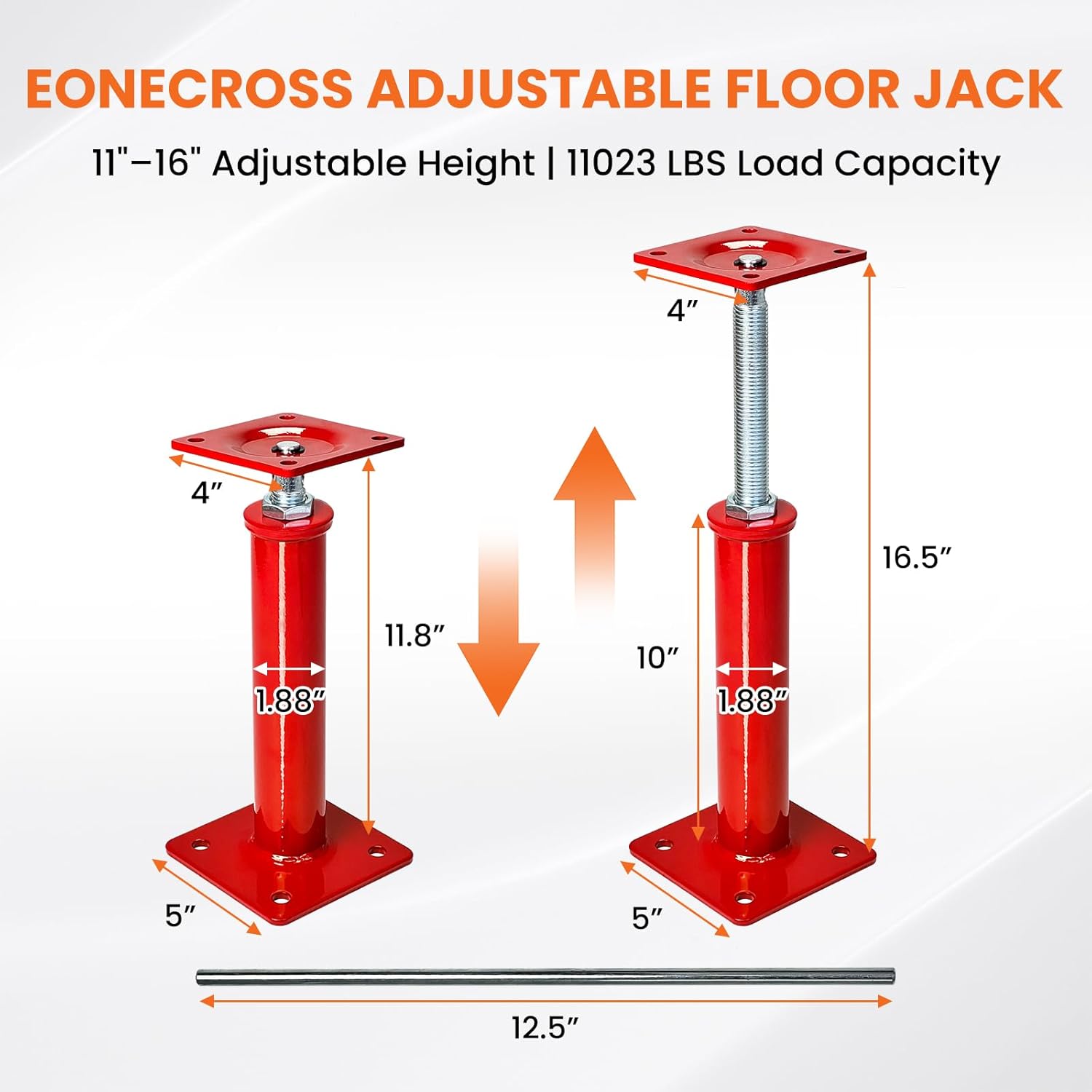
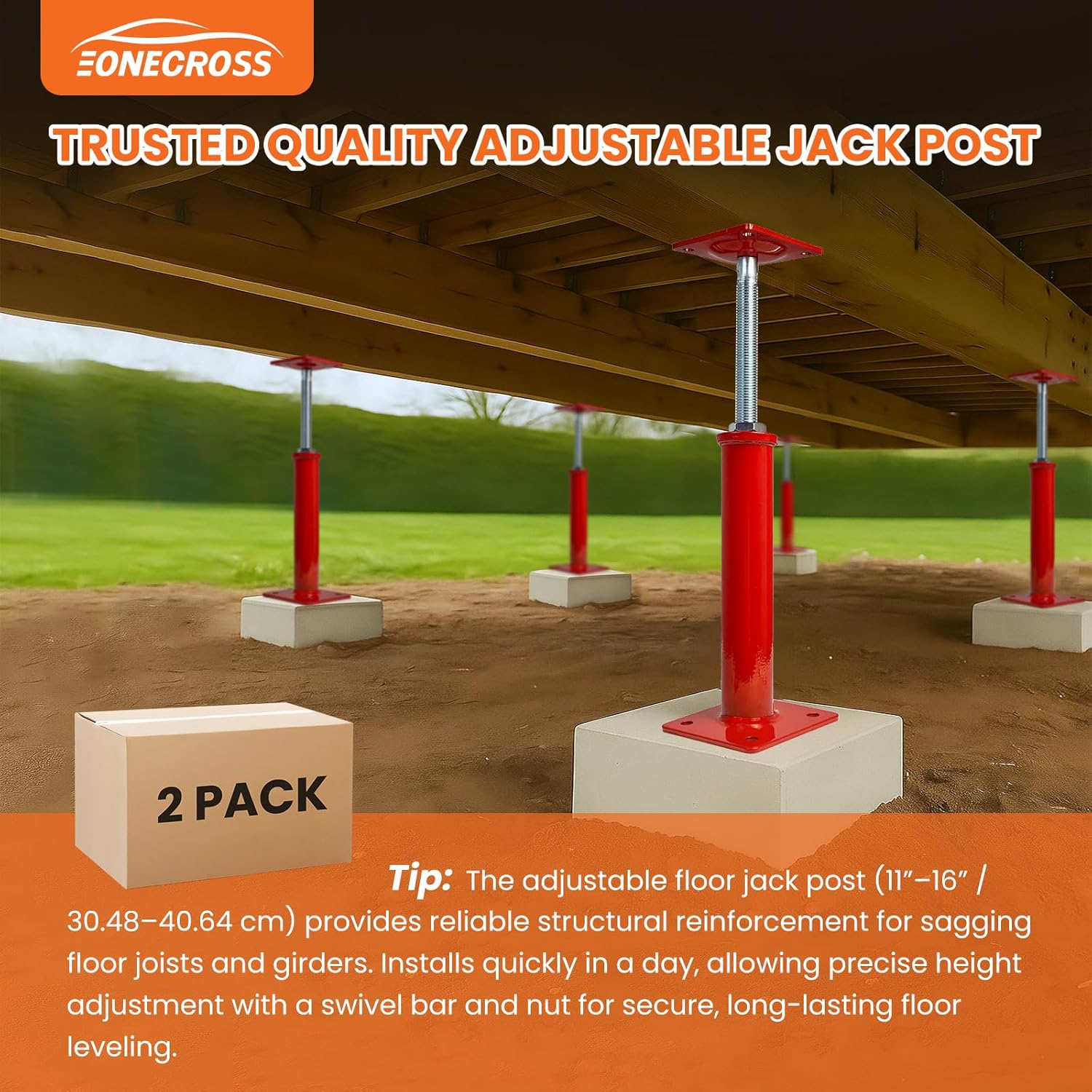
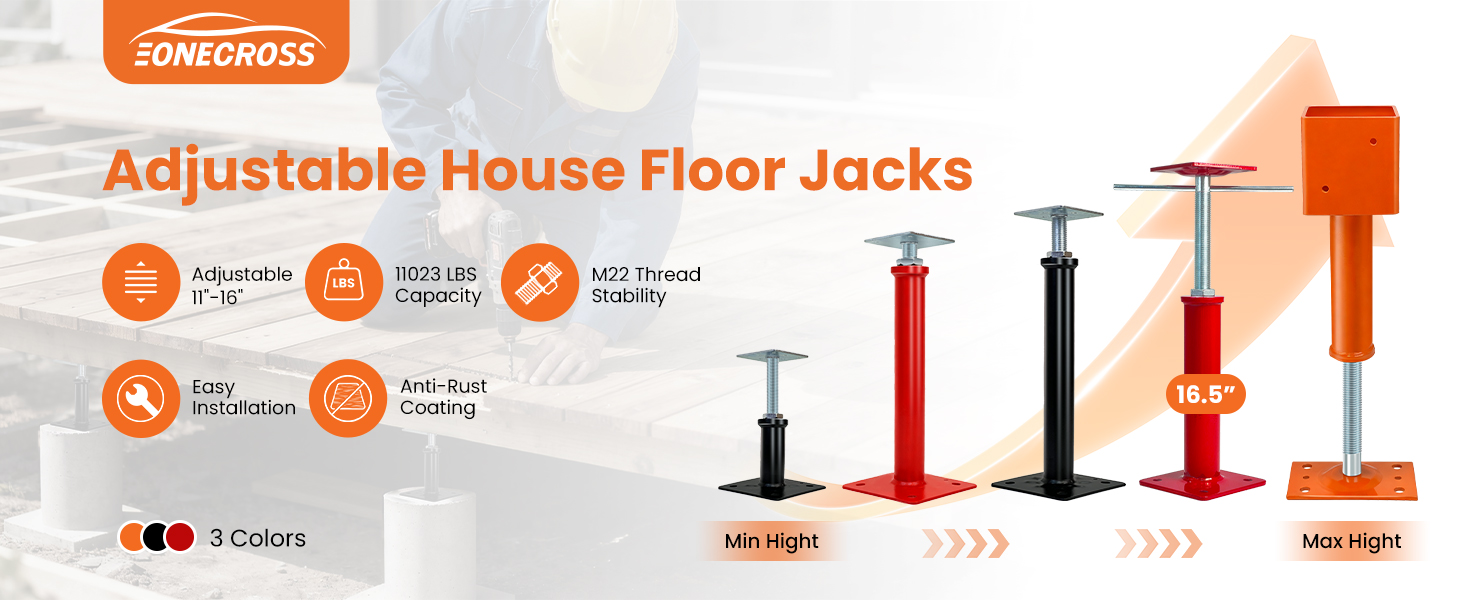
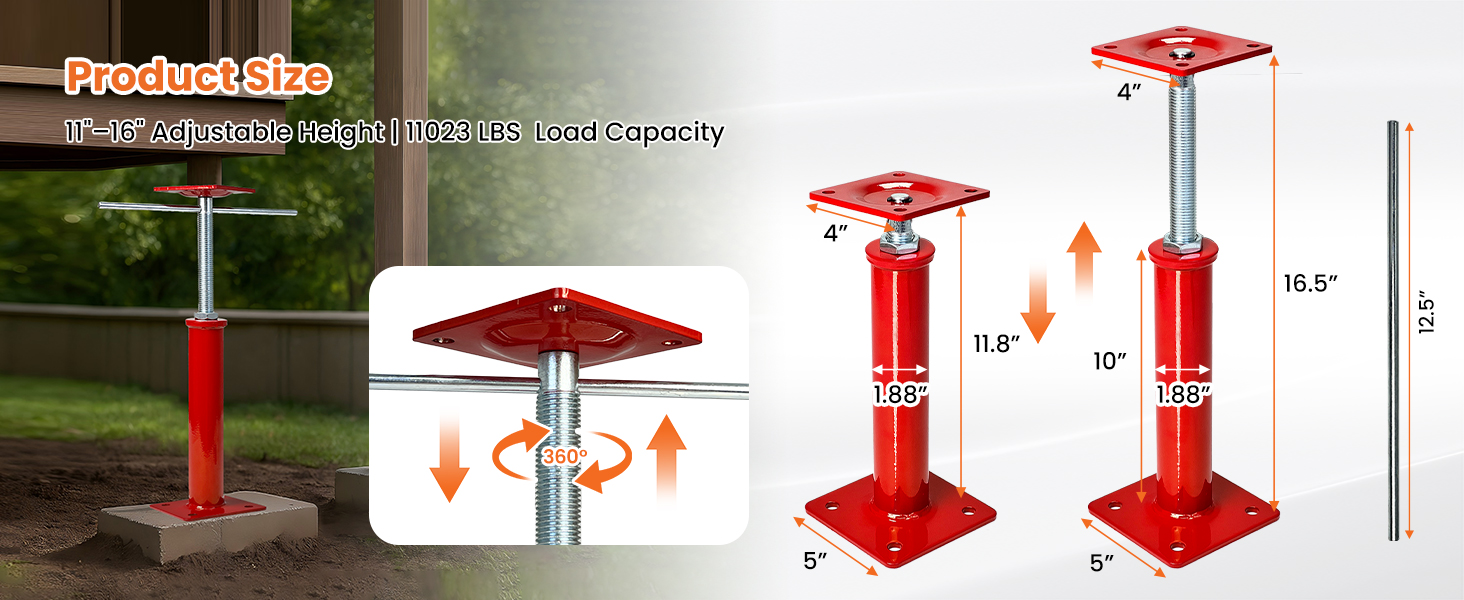
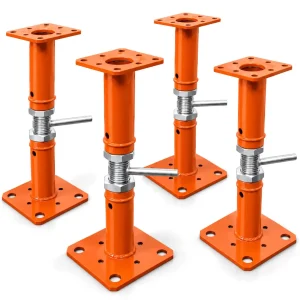
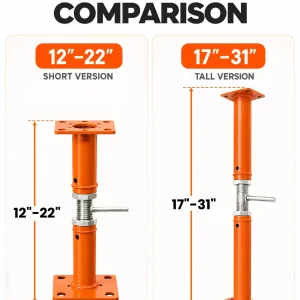
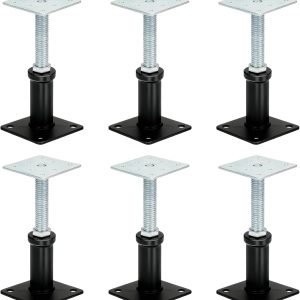
I looked at this EONECROSS four-pack because the adjustable 11.8 to 16-inch height range is well suited to short crawl-space and under-beam applications. These are heavy-duty steel screw-style support posts intended for beams and floor joists, and having four identical units makes distributing support across multiple locations considerably easier. They are compact, straightforward pieces of hardware, which I appreciate because structural support equipment probably isn’t the place for unnecessary decorative flourishes.
The first thing to understand is the limited adjustment range. At roughly 11.8 inches fully shortened and 16 inches at the upper end, these are designed for low-clearance situations, not for spanning several feet from a basement slab to overhead framing. I measured every intended location before starting because discovering that a structural post is two inches too short after crawling underneath the house ranks poorly among recreational activities. Within the correct range, the screw adjustment provides useful control for bringing the post into firm contact with the framing.
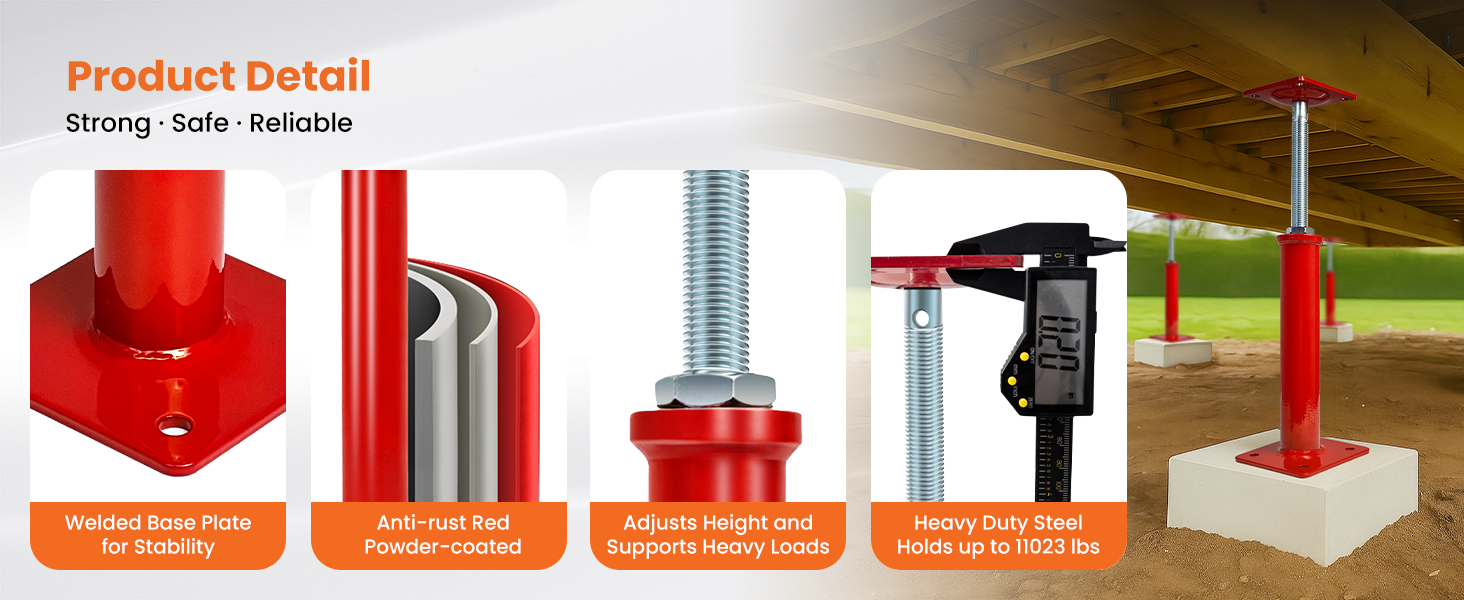
The steel construction feels substantial, and the threaded adjustment is the feature that makes these much more useful than a fixed support. Fine adjustment matters when working beneath joists or beams because structural leveling should generally be approached gradually rather than treated like changing a tire. With four posts, it’s possible to work across several support locations instead of concentrating everything at one point. I found that controlled, incremental adjustment is the sensible approach, particularly in an older structure where floors, walls, doors, plumbing, and finishes have spent years settling into their current positions.
Installation itself isn’t complicated mechanically, but preparation matters more than simply putting a post under something and turning the screw. Each unit needs a solid, stable bearing surface below and appropriate structural contact above. A weak footing, loose block, soft ground, damaged beam, or badly positioned post can undermine the entire purpose of using a heavy steel support. The post should also be kept properly aligned rather than installed at an angle and expected to negotiate with gravity indefinitely.
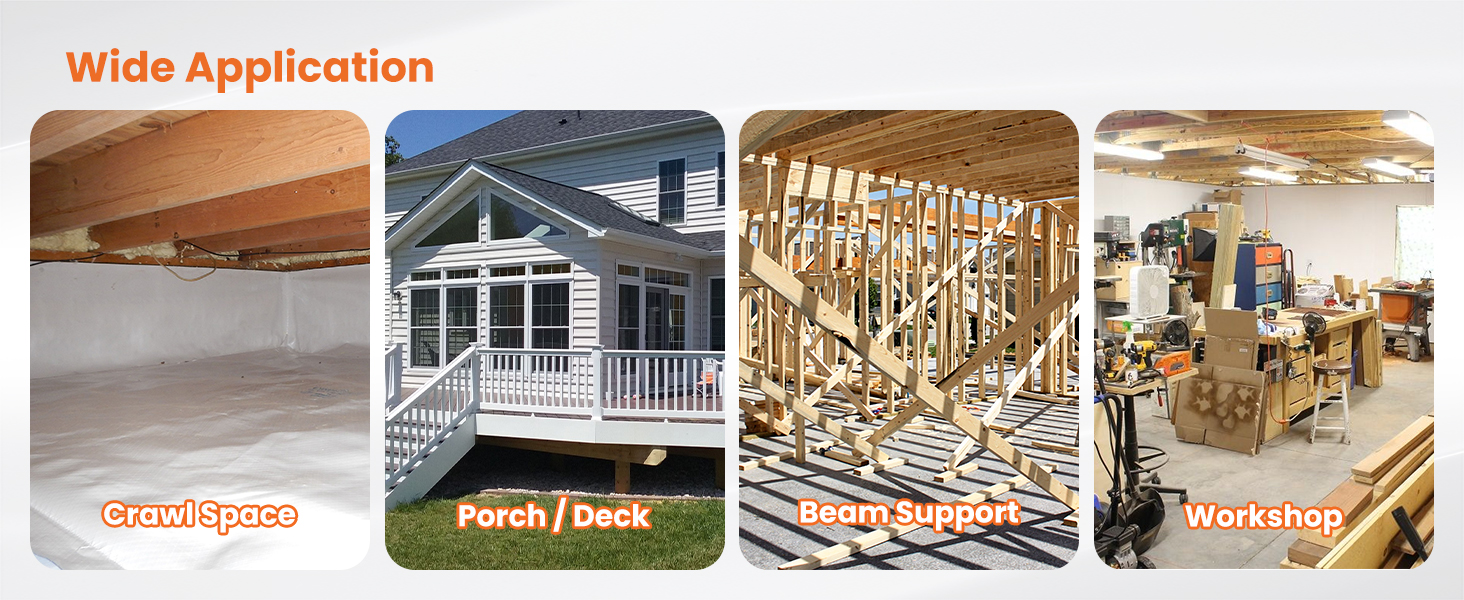
The compact size is especially useful in crawl spaces where working room is limited and a conventional full-length support column would be impractical. The downside is exactly the same feature, the 16-inch maximum limits where these can be used, so careful measurements are mandatory. They also aren’t magical cures for foundation movement, rotted framing, undersized beams, or significant structural damage. If the problem involves major settlement, uncertainty about load paths, permanent structural modification, or anything beyond straightforward support work, getting advice from a qualified structural professional is considerably cheaper than learning structural engineering through property damage.
As a four-pack, these provide a practical combination of sturdy steel construction, compact dimensions, and precise screw adjustment for appropriately sized applications. I especially like having matching posts available when support needs to be distributed along a beam or beneath several floor locations. They feel like proper purpose-built hardware rather than the questionable assortment of blocks and lumber that sometimes gets inherited with older houses. Measure carefully, provide proper bearing surfaces, make adjustments gradually, and use them within an appropriate structural plan, and they’re a useful addition to a crawl-space or basement project. Great value for the price and quality! ?
M –
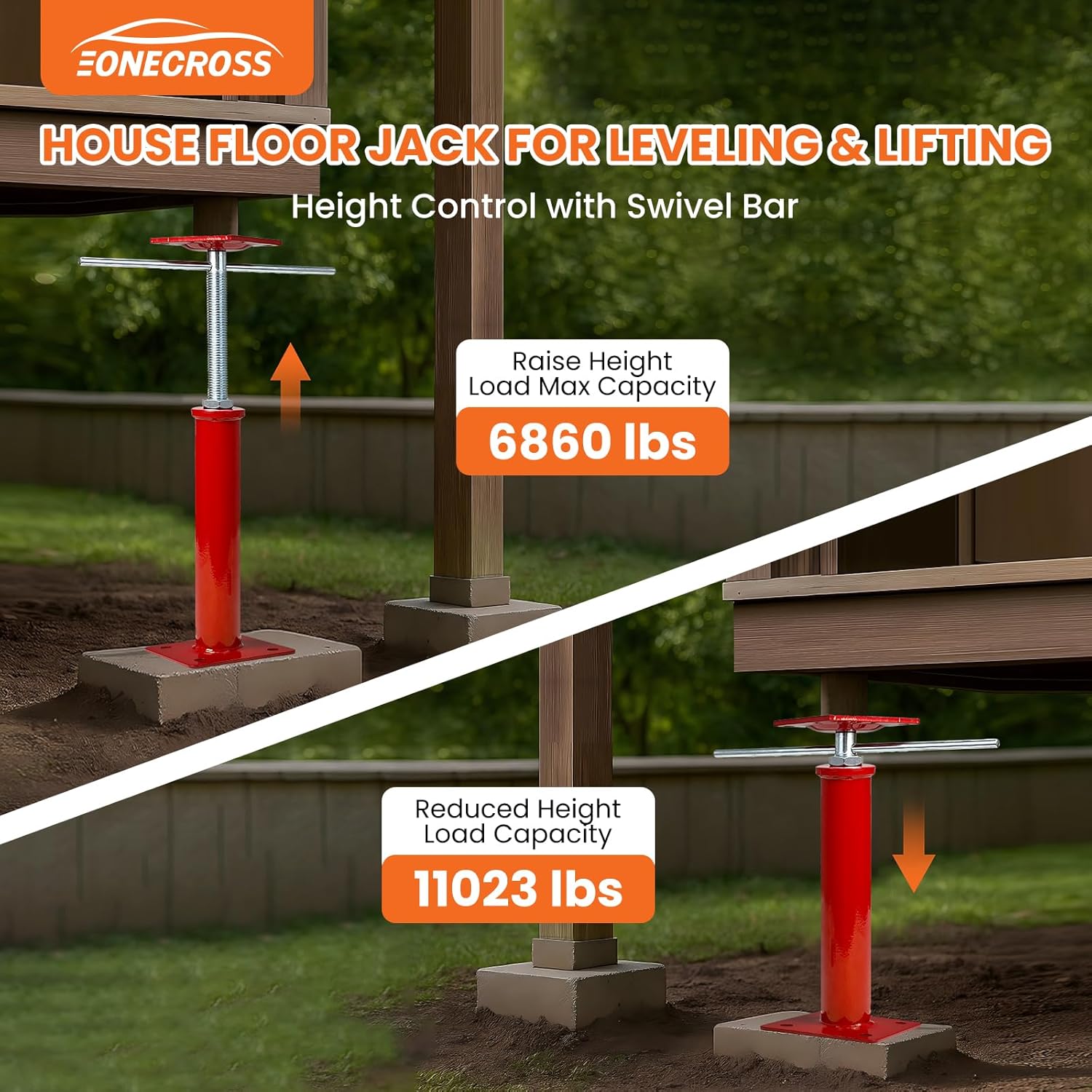
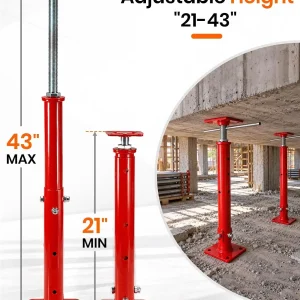
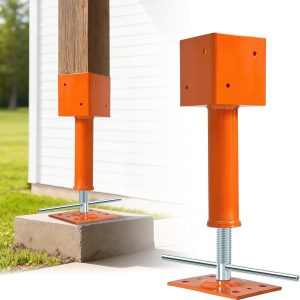
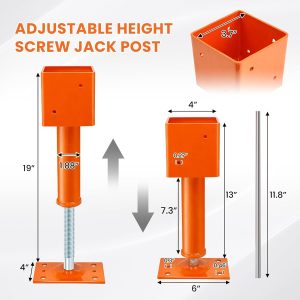
As someone mentioned if you were getting them for 4×4 post lifting they might not work / fit that with the provided pre-drilled holes. Apart from that, these are pretty solid for applications around the homestead if you have heavy equipment or need to temporarily lift a deck to fix it.
I put these under my box blade to get it level so when I disconnect/reconnect it on uneven ground it:
(a) won’t sag back down (I tend to move the scarifier hooks facing up and out of the way so it can’t rest on those)
(b) it’s right where I left it and it’s easy to line up the 3-point hitch for reattaching. Then, I can simply raise the 3-point and drive away or back it up and lower it onto the jacks and detach.
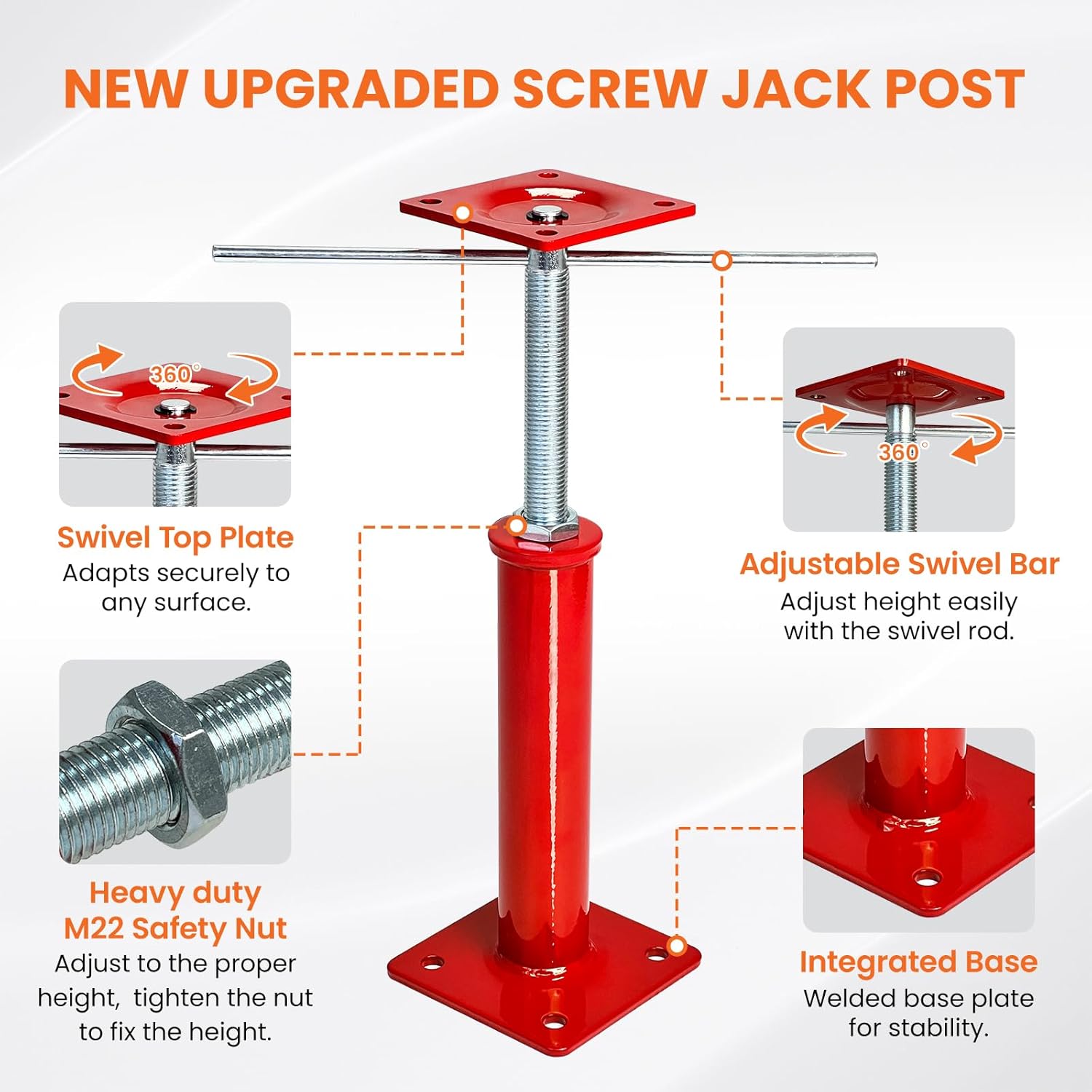
I used to use wood blocks and they work, but these let you make subtle adjustments for the never-level ground on which I operate, all with the provided turning rod. A lot of these type jacks don’t have that – merely a bolt you have to adjust with a wrench. This has the bolt to hold position and the threaded stem with the rod, which makes it easier.
You might have to cut the turning rod (or at least one of them) to a more manageable length in case you’re in tight spaces, as it might be too long to turn where you’re using it.
D and J Hart –
I have had a chainsaw mill for years, but I really needed a router sled for smaller or more detailed work, if only so I wouldn’t always have so much planing or sanding to do across some of the bigger stretches of lumber.
The predrilled bases worked great for my Bosch router, the bars didn’t flex which is a testament to the durability of the materials they used, even when I had it set to its limits, and I found I could work on slabs of wood that were as much as 4 inches thick. So that is all wonderful. Once set up for me it worked like a champ. I couldn’t be happier with the end results.
That said, I had a bugger of a time setting it up. From the time the instructions were made to when this was produced there were apparently some revisions. Nothing big, but I did waste some time trying to follow steps that are irrelevant. Once I realized this, I want to say all told it took me a bit better than an hour to get it setup right. Now that it is done, as long as I don’t opt to fudge with it down the road, I just have to grab my router and go.
In the end I feel like this is a pretty good buy, especially if it remains on sale. It prices fairly when compared to similar quality products, while outperforming some of the cheaper ones.
S.EV –
My husband has been looking forward to setting this up because he has always wanted a router sled for flattening slabs. This is a 57.1″ adjustable slab flattening jig that can handle a heavy duty router. This jig looks like a high quality router sled. It is very long and seems to be very durable and that it is well worth the money.
How easy is it to use? He does not know yet because it is not fully functional. The set up is a bit of a nightmare and so it is not complete. If you do not have the means to make sure the sides are perfectly parallel, then you will not be able to use it flawlessly. There are four hex head screws that must be adjusted a bit at a time in order to make these rails perfectly parallel to each other.
It comes with two router bases, a blank one and a pre-drilled one. The instructions are inadequate for either set up or use of this. It is recommended that you watch some videos and spend sufficient time to ensure that the set up is proper. You will also need a very large table or surface to set this up. It is quite large. The advantage of this is that it allows you to work on a very large slab to make a large table top or shelf. My husband has cut some huge pieces of walnut from a tree and kiln dried them and after finishing the set up, and practicing on some scrap lumber, he will flatten one of those slabs to make me the table I have wanted for years.
He is very confident that he is bright enough to figure out the proper way to assemble and use this, but wishes that the instructions were more detailed, clear, and updated. He examined all the parts and is pleased with the quality of the jig and expects that it will do the job it is intended to do. He liked the brushes positioned ahead of the rollers which will keep the path clear.
Make sure you also understand that this is just the flattening slabs and does NOT include a router or sharp bits. These are obviously things that you will either have or have to purchase separately.
Why would you get this? If you want to flatten a slab without having to take it to large sanding or planing equipment. If you did it with a planner you would have to shim it very carefully in order for it to be solid so the planer won’t destroy the wood. So with this sled you are not limited to the size of the planer, which costs thousands of dollars. This is a great compliment to your various tools to make cutting boards, table tops and other woodworking projects at home.
D_Notice –
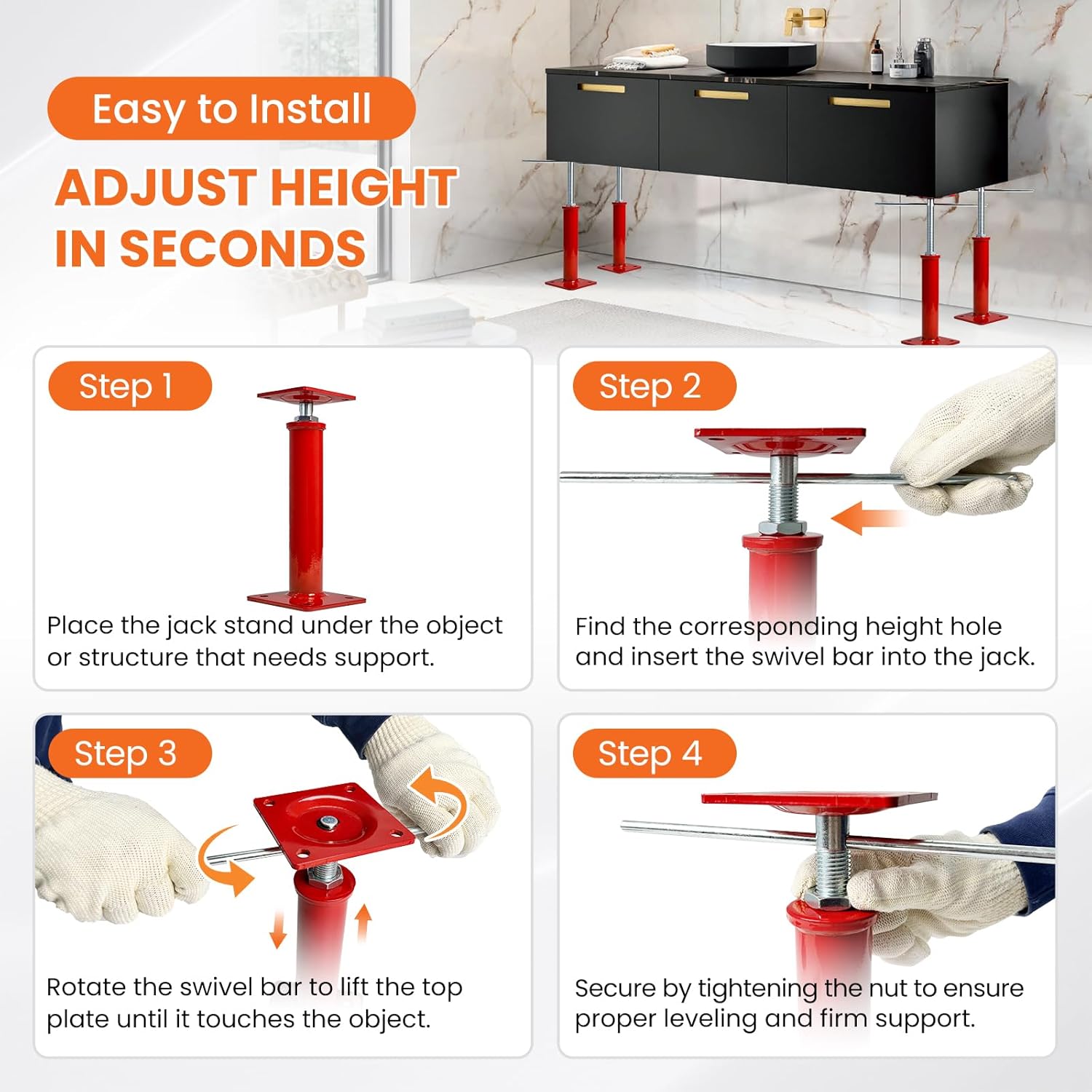
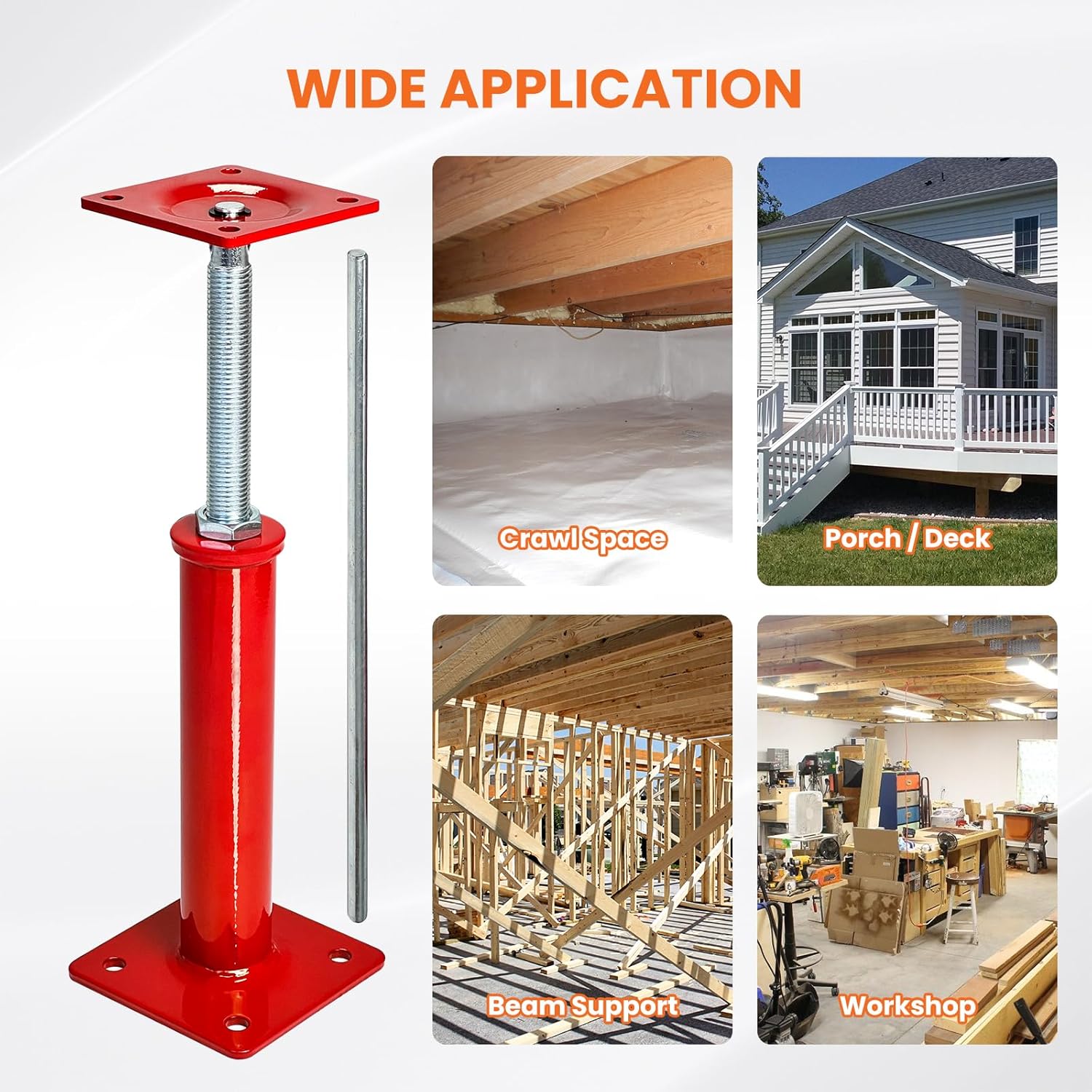
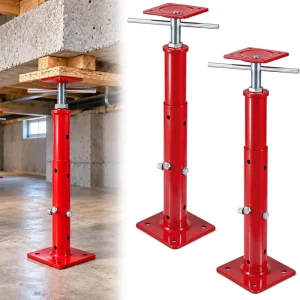
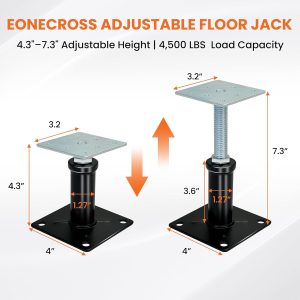
This is a pretty good bang for your buck tool to have around the house (or under it). The top plate swivels nicely, moving freely as you spin the screw shaft to get your jack in place. They’re easily adjustable with the added bar that runs through the shaft and will remain sturdy once you get them set. I suppose you could use them to try and jack something up, but I find they’re more useful as stands that you can adjust within fractions of an inch. I use a dedicated jack to get my item in the air (in this case a floor joist) and then I slip this under and spin it up to my desired height before lowering the weight back down onto these jack stands. Please see my pictures for a better idea of the hole spacing if you need it. Note that the bottom plate is larger than the top plate.
Naomi –
I picked up this 57.1?inch adjustable router sled to help flatten a few large walnut slabs, and it¡¯s quickly become one of those woodworking tools I wish I¡¯d bought sooner. The heavy?duty construction is the first thing that stood out – the rails feel sturdy, the sled glides smoothly, and everything locks in place without wobble or flex. When you¡¯re running a router across a big slab, that stability matters more than anything.
The adjustability is a huge plus. Being able to dial in the width for different slab sizes makes the whole setup feel versatile instead of ¡°single?purpose.¡± I¡¯ve used it on a coffee?table slab and a much wider countertop piece, and the jig handled both without any fuss. The movement is controlled and predictable, which helps keep the surface even and reduces the amount of sanding afterward.
Assembly was straightforward, and once it¡¯s set up, the workflow becomes almost meditative – just smooth passes and consistent results. My slabs came out flat, clean, and ready for finish much faster than when I tried to improvise with homemade rigs.
If you¡¯re working with live?edge slabs or thick hardwood pieces and want a reasonably priced, dependable, heavy?duty sled that doesn¡¯t fight you during the process, this kit delivers exactly what it promises. It¡¯s a great addition to any woodworking setup.
P. Foster –
The Router Sled for Flattening Slabs, 57.1-Inch Adjustable Slab Flattening Jig, Heavy-Duty Router Sled Kit for Woodworking, Wood Slab Planing and Surfacing delivers rigid cross-beam support, smooth gliding passes, and dependable leveling accuracy for flattening large live-edge slabs, butcher blocks, tabletops, and rough-sawn lumber. Engineered from heavy-duty extruded aluminum rails with precision-machined guide brackets, the jig demonstrates solid manufacturing quality and robust structural durability that resists sagging, deflection, or flex across its full 57.1-inch span. When paired with a quality surfacing bit, its rigid carriage holds router depth dead flat, allowing the cutter’s sharpness to slice cleanly across twisted, cupped, or figured grain without leaving ridges, chatter marks, or tear-out. The adjustable rail spacing accommodates a wide range of router base plates securely, ensuring steady, low-friction travel during continuous planing passes. Providing woodworkers with commercial-grade slab-flattening capability without the massive expense or footprint of a wide-belt sander or industrial planer, this adjustable router sled kit delivers exceptional precision and outstanding overall value for money.
CAROL T. MULVIN –
great product, heavy duty.
NalaGrace –
I use this router sled with my Milwaukee router to flatten wood slabs and butcher block countertops, and it works great. Even precut slabs can develop some warping during storage, and this setup makes quick work of leveling them out. The 57 inch aluminum rails provide plenty of working area for larger pieces, and the adjustable height makes it easy to accommodate different thicknesses. The router moves smoothly along the rails, allowing me to make consistent, overlapping passes for a perfectly flat surface. The aluminum construction provides good stability and keeps the router at a consistent cutting height. Assembly and initial alignment take some time since the rails need to be parallel and level, but once everything is adjusted, it works beautifully. It’s an excellent alternative to a large planer for oversized slabs and countertops. Good quality construction, excellent results, and a great value for the money.